
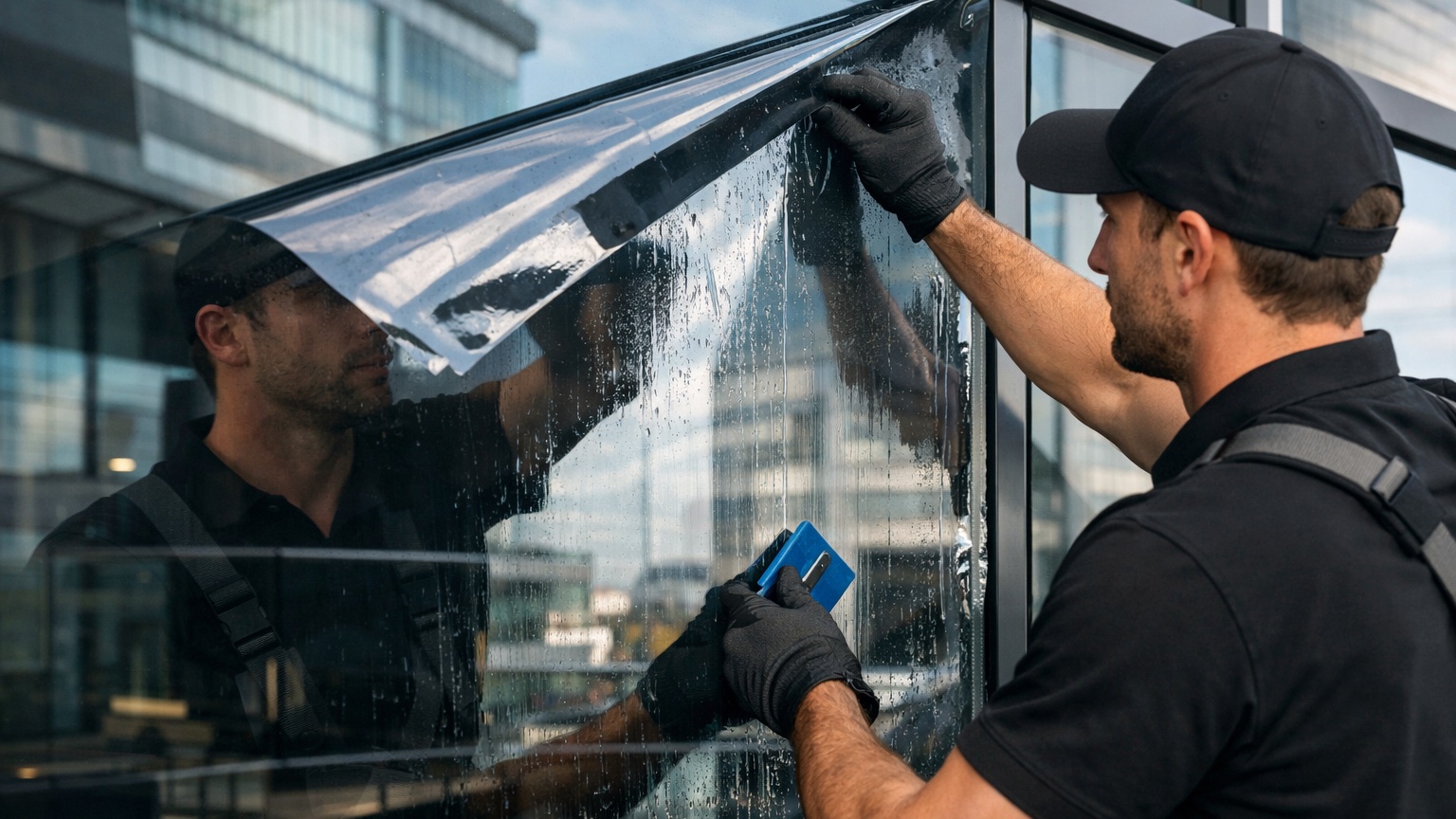
Large glass facades define today’s commercial architecture, delivering natural light, visibility, and a modern aesthetic that tenants value. These spaces also create challenges with solar heat gain, glare, and energy costs, presenting an opportunity to improve performance through the right window film strategy.
Understanding the differences between dual-reflective and multi-layered optical window films allows installers to recommend solutions that align with each building’s energy goals, privacy needs, and design priorities. Proper specification ensures measurable results and long-term client satisfaction.
What is Dual-Reflective Window Film?
Dual-reflective window films feature two distinct reflectivity levels engineered into a single product. The exterior surface uses a higher-reflective coating to reject solar heat before it passes through the glass, while the interior surface maintains lower reflectivity for clearer outward visibility.
During daylight hours, the exterior acts as a mirror, bouncing solar energy away from the building. At night, the interior coating allows occupants to see out without the mirror effect that would otherwise occur.
Solutions from 3M: 3M Night Vision Series films (NV15, NV25, NV35) exemplify dual-reflective technology, offering clients the high heat rejection of reflective films with significantly improved nighttime visibility compared to traditional metallized options.
What is a Multi-Layered Optical Window Film?
Multi-layered optical films (MOF) are engineered to maintain low interior and exterior reflectivity, preserving the natural appearance of glass from both inside and outside the building. These films manage solar heat through absorption rather than visible reflectivity, eliminating the mirrored facade effect associated with traditional reflective films.
Solutions from 3M: 3M Prestige Series films represent the premium neutral category, using over 200 nano-layers of polyester to block infrared heat without relying on reflectivity or darkening.
Key Differences Between Dual-Reflective and MOF
The primary differences between these film types center on solar energy management, appearance, and performance priorities.
| Feature | Dual-Reflective Film | MOF |
|---|---|---|
| Exterior Appearance | Mirrored, reflective | Natural, subtle |
| Interior Appearance | Low reflectivity at night, clear view | Low reflectivity, clear view |
| Heat Rejection | High | Moderate to high |
| Daytime Privacy | Strong | Moderate |
| Best For | Maximum solar control and privacy | Aesthetics and moderate performance |
Heat Rejection and Energy Efficiency
Dual-reflective films typically deliver higher heat rejection because the reflective exterior layer bounces solar energy away before it penetrates the glass. Multi-layered optical films reduce heat through absorption and selective wavelength filtering, which provides effective but generally more moderate heat rejection compared to highly reflective options.
Key performance benefits clients gain include:
- Lower cooling costs: Both film types reduce solar heat entering occupied spaces
- Improved occupant comfort: Less heat means more consistent indoor temperatures throughout the building
- Energy savings: Dual-reflective films often deliver more aggressive performance in buildings with significant sun exposure
- Payback: Dual-reflective films deliver lower paybacks as they offer higher performance at a lower cost
Glare Reduction and Visual Comfort
Both dual-reflective and MOF reduce glare from direct sunlight, improving conditions for computer work and general indoor comfort. Dual-reflective films are often darker than MOF, and as such, provide more aggressive glare control. MOF offer less glare reduction as they often allow in more light than dual-reflective films.
Daytime Privacy and Nighttime Performance
Understanding how window film affects privacy throughout the day helps set appropriate client expectations. The privacy effect of reflective films depends entirely on lighting conditions.
How Privacy Works During Daylight Hours
During daylight, brighter exterior light creates a mirror effect on dual-reflective film, hindering people outside from seeing into occupied spaces. MOF, which are neutral in appearance, provide less daytime privacy because they lack the reflective surface that creates the one-way mirror effect.
What Happens After Dark
When interior lights are on and exterior conditions are dark, the privacy effect reverses for dual-reflective films. People outside can see in while occupants cannot see out as clearly.
Light Transmission and Appearance Considerations
The amount of natural light entering occupied spaces affects both occupant comfort and energy use, making visible light transmission an important selection factor.
Visible light transmission (VLT) measures the percentage of natural light passing through the film. Both dual-reflective and multi-layered optical films are available in various VLT options, typically ranging from light to dark. MOF tend to preserve a brighter, more open feel because they don’t rely on reflectivity to block heat.
Dual-reflective films may slightly alter the color of natural light entering spaces, creating a subtle tint some occupants notice. MOF maintain a truer-to-life appearance, preserving the natural quality of daylight without color distortion.
Building owners and property managers concerned about maintaining architectural aesthetics often prefer multi-layered optical films because they don’t change the exterior appearance of their property. Dual-reflective films create a more dramatic look that some property owners appreciate but others find too bold for their building’s design.
Best Applications for Commercial Buildings
Commercial properties have unique requirements based on space usage and occupancy patterns.
1) Office Spaces and Conference Rooms
- Open office environments: Dual-reflective films reduce glare on monitors and improve occupant comfort in spaces with extensive computer use.
- Executive offices: MOF is preferred when client-facing aesthetics matter or when important exterior views need preservation.
2) Healthcare and Hospital Facilities
- Patient rooms: MOF like 3M Prestige Series maintain natural daylight that occupants enjoy while blocking heat that interferes with HVAC systems and patient comfort.
- Waiting areas: Dual-reflective films provide privacy screening for ground-floor facilities while reducing cooling loads in high-traffic areas with extensive glazing.
- Operating rooms and labs: Multi-layered optical films reduce heat without creating interior reflections that could interfere with sensitive equipment or procedures.
3) Hospitality Properties
- Hotel guest rooms: MOF preserve views that guests value while improving energy efficiency. 3M Prestige 50 or Prestige 70 maintain brightness while blocking heat.
- Lobby and common areas: Dual-reflective films manage solar heat gain in expansive glass facades.
- Conference and event spaces: MOF reduce glare on projection screens and monitors without darkening spaces or altering natural lighting critical for events.
4) Retail Storefronts
- MOF typically work better for retail because they maintain product visibility and create an inviting appearance for customers. Dual-reflective films may obscure merchandise displays and make storefronts appear closed or uninviting.
5) Educational Facilities
- Classrooms: MOF reduce glare from windows on whiteboards and screens while maintaining natural daylight important for student focus and energy levels.
- Libraries and study areas: Dual-reflective films provide privacy screening for ground-floor spaces while managing heat gain in highly glazed reading areas.
- Administrative offices: Either option works depending on aesthetic requirements and privacy needs for counseling offices or administrative spaces.
6) Government and Municipal Buildings
- Courthouses: Dual-reflective films provide daytime privacy for sensitive proceedings in ground-floor courtrooms while reducing cooling costs.
- City halls and public spaces: Multi-layered optical films maintain transparency and accessibility appropriate for public buildings while improving energy efficiency.
- Police and fire stations: Security considerations may favor dual-reflective films for privacy, while MOF work well for community-facing spaces.
7) Multi-Tenant Properties
- Consider building-wide aesthetic consistency when selecting film for multi-tenant properties. MOF offer uniformity without creating a dramatic reflective look across multiple units, which matters for properties where individual tenants have different preferences.
When to Recommend Dual-Reflective Window Films
Dual-reflective films are the better choice when clients need maximum heat rejection in buildings with significant sun exposure. This film type excels at providing strong daytime privacy for ground-floor offices or street-facing windows where passersby might otherwise see inside.
Recommend dual-reflective films when clients require:
- Aggressive glare control for spaces with extensive computer use
- Energy efficiency as the top priority for reducing cooling costs
- Daytime privacy over nighttime privacy
Solutions from 3M: 3M Night Vision Series provides dual-reflective performance with improved nighttime visibility compared to traditional metallized films, making it ideal for 24-hour facilities or buildings where occupants work after dark.
When to Recommend Multi-Layered Optical Window Films
MOF are ideal when natural appearance matters for historic buildings or design-conscious properties. This option provides balanced performance with moderate heat and glare reduction without altering the building’s exterior look.
Recommend MOF when clients have:
- Building code restrictions that prohibit reflective films on the property
- Retail or hospitality settings that require visibility into the space
- Architectural aesthetics as a priority concern
- Desire for solar control without a mirrored facade
Solutions from 3M: 3M Prestige Series films offer amazingly high performance.
Common Myths About Reflective and Multi-Layered Optical Window Films
Myth: Window Film Makes Interiors Too Dark
Modern window films are available in a wide range of visible light transmission options and many maintain bright, comfortable interiors. Clients can select films that block heat and glare while still allowing substantial natural light to enter occupied spaces.
Myth: Dual-Reflective Films Provide Complete Nighttime Privacy
No reflective window film offers nighttime privacy when interior lights are on because the reflective effect reverses in low exterior light conditions. Clients will need additional window treatments like blinds or curtains for privacy after dark.
Myth: A Neutral-Looking Film Cannot Block Significant Heat
Neutral-looking films, such as MOF, use advanced technology to reject heat effectively even without a highly reflective surface. While dual-reflective films may offer higher heat rejection percentages, MOF still provide meaningful solar control and energy savings for most commercial applications.
Your Partner in 3M Architectural Window Films
Energy Products Distribution supports dealers with direct access to the full portfolio of 3M dual-reflective and MOF window films, including Night Vision and Prestige. Our team understands the performance differences between these technologies and how to match them to specific commercial applications.
Dealers can purchase 3M architectural window films directly through EPD with the confidence that you are sourcing authentic products backed by manufacturer warranties and supported by experienced professionals. Our goal is simple: help you deliver reliable results, strengthen client relationships, and grow your commercial film business. Become an authorized 3M dealer to access the full range of MOF and dual-reflective films for commercial applications.

Energy Products Distribution is a Master Distributor of 3M Window Films, 3M Paint Protection Films, 3M Wrap Film Series 2080, 3M Protection Wrap Films, 3M Architectural Finishes, 3M Ceramic Coatings, and Windshield Skin. We sell our products to professional installers throughout the US who provide turnkey installations (labor and material) to end-users in the automotive, commercial, government, and residential markets. Contact us to learn more about the benefits of these products.