
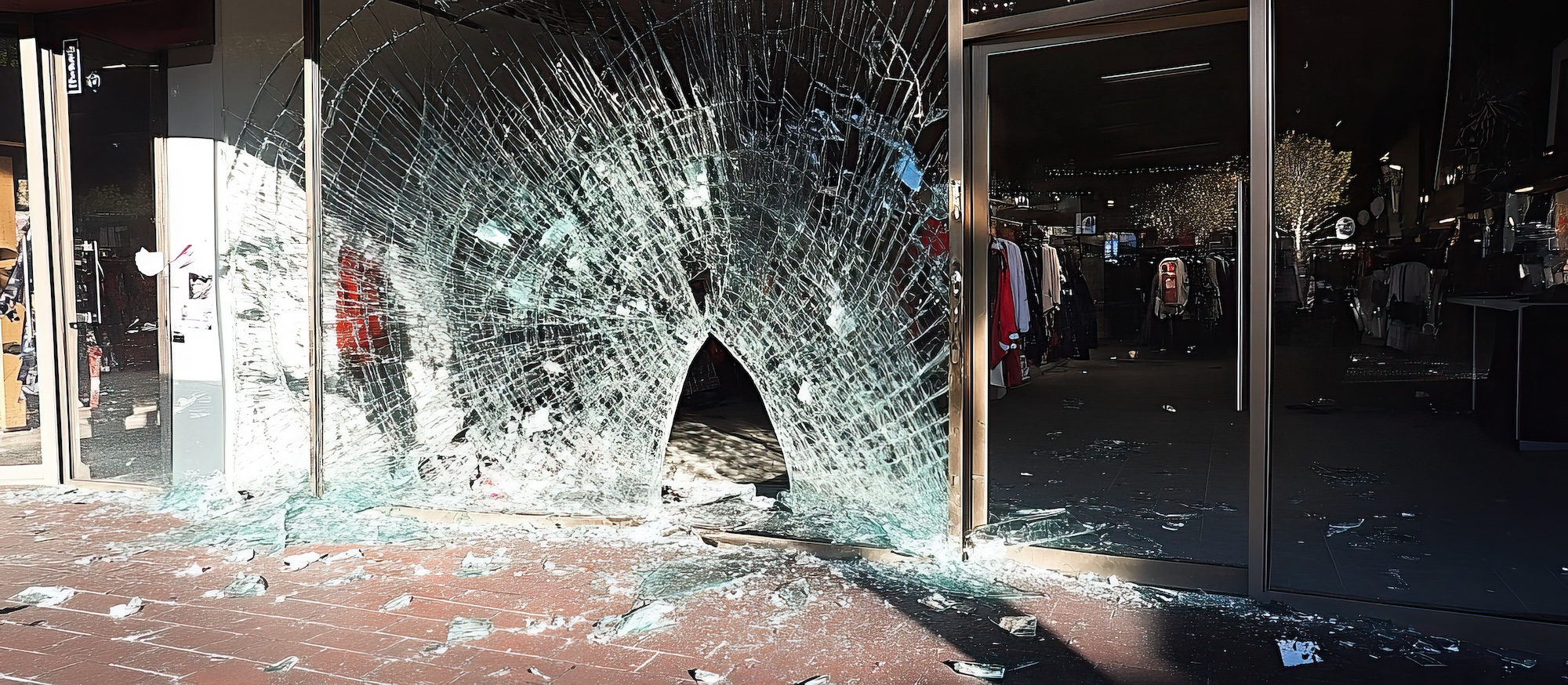
Marketing videos often show security window film mitigating the effects of sledgehammers, axes, or even explosions. While those demonstrations are attention grabbing, they rarely reflect real world installations or typical performance. As security window film is increasingly discussed in the context of schools, religious institutions, workplaces, healthcare facilities, and other public or private buildings, exaggerated claims can create unrealistic expectations or unnecessary skepticism.
Understanding what security window film actually does, and what it does not do, helps you make a confident, informed decision about protecting your home, building, or facility.
Table of Contents
- Security Film Myths That Cause Confusion
- Myth 1: Glass Becomes Unbreakable
- Myth 2: Security Window Film is Bulletproof
- Myth 3: Thicker Film Always Means Better Protection
- Myth 4: All Security Films Perform the Same
- Myth 5: Security Films Ruin Window Appearance
- Myth 6: Additional Security Measures Are Unnecessary
- Myth 7: Security Film Only Needs to Be Applied to the Glass
- Myth 8: Any Installation Method Produces the Same Results
- Realistic Outcomes vs. Exaggerated Claims
- Next Steps for Your Property
Security Film Myths That Cause Confusion
Security window film myths often lead people to expect results the product was never designed to deliver. In other cases, misinformation causes property owners to dismiss a proven safety solution entirely. The following myths represent the most common sources of confusion in the market.
Myth 1: Glass Becomes Unbreakable
Security window film does not make glass unbreakable. With enough force, glass will still crack or shatter.
What the film does is help to hold broken glass together. Instead of scattering into dangerous shards, the glass remains bonded to the film, keeping the window opening intact.
This provides several important benefits:
- Helps reduce injury by keeping sharp glass fragments from flying into occupied spaces
- Helps delay forced entry by maintaining a protective barrier after impact
- Helps preserve the window as a physical obstacle even after the glass is damaged
Myth 2: Security Window Film is Bulletproof
No window film makes standard glass bulletproof. Despite misleading online claims, true ballistic protection requires specially engineered laminated glass systems designed to stop projectiles.
Myth 3: Thicker Film Always Means Better Protection
For years, film thickness was assumed to be the primary indicator of security performance. While thickness can be a useful comparison among traditional polyester-based films, it is not necessarily the most reliable way to judge how well a security window film will perform.
Newer technologies, including urethane-based films like 3M Scotchshield Safety & Security Window Film System S2400, behave very differently than older PET films. Urethane is far more flexible and stretchable, allowing it to absorb and dissipate impact energy rather than tearing quickly. This means a film of similar or even greater thickness does not automatically provide better protection if it lacks the ability to stretch and hold glass together under stress.
Today, performance depends more on material composition, tear resistance, and how the film manages energy during impact, not just how thick it is.
Myth 4: All Security Films Perform the Same
Security window films vary widely in material type, adhesive systems, and overall construction quality. Comparing films based only on traditional measurements like thickness or tensile strength can be misleading, especially when different materials such as PET and urethane are involved.
More meaningful indicators of performance include:
- Base film composition and flexibility
- Tear resistance
- Material adhesive
- Requisite attachment systems
Higher performing systems combine advanced materials with proper attachment methods to deliver reliable real world protection.
Myth 5: Security Films Ruin Window Appearance
Security window films are available in clear and tinted forms, with the former preserving the appearance of your windows. When professionally-installed, they are virtually invisible.
For property owners looking to combine safety with comfort, lightly tinted options can also reduce glare and heat while still providing security benefits.
Myth 6: Additional Security Measures Are Unnecessary
Security window film is most effective when used as part of a layered security strategy. Film alone cannot address vulnerabilities such as weak door hardware, unreinforced frames, or lack of intrusion detection.
A complete approach considers:
- Entry points including doors, ground level windows, and accessible openings
- Frame reinforcement to support film performance
- Alarm and monitoring systems that alert occupants or authorities
For a thorough understanding, it is best to contact a professional security consultant.
Myth 7: Security Film Only Needs to Be Applied to the Glass
Many people assume that once security window film is applied to the glass, the job is done. While film applied to the glass can help hold broken fragments together, the way the film is secured at the edges can influence how the window performs after impact.
Traditional installations often stop short of the window frame, leaving a small gap around the edges. In higher stress events, the entire glass pane may still be pushed or blown out of the frame even if the film remains intact.
To address this limitation, attachment systems are installed in conjunction with the film to help anchor it to the glass and window frame. One example is 3M’s Impact Protection Adhesive (IPA), a structural silicone adhesive used as part of a system to bond the film, glass, and frame together.
Attachment methods are not intended to make glass unbreakable, but they can help the window opening remain covered after breakage and support the overall performance of the security film system.
Myth 8: Any Installation Method Produces the Same Results
Installation quality directly affects performance. Security window film must be installed according to manufacturer specifications to work as designed.
Improper surface preparation, incorrect adhesive application, or inadequate edge sealing can cause premature failure during a real security event. DIY installation or inexperienced contractors often compromise the film’s ability to hold glass together under impact.
Realistic Outcomes vs. Exaggerated Claims
Security window film is intended to help delay forced entry rather than stop it entirely. When properly specified and installed, it may help resist repeated impacts from common tools, which can contribute to slowing an intrusion and reducing immediate hazards during an event.
In real world applications, security window film may help:
- Keep broken glass fragments bonded together instead of scattering into occupied spaces
- Maintain a barrier after impact, which can make forced entry more difficult
- Reduce flying debris during storms or other high impact events
- Improve safety during accidental glass breakage
Highly dramatic marketing videos often rely on controlled conditions, specialized installation methods, or configurations that differ from typical real world applications.
Next Steps for Your Property
Start by assessing which windows present the greatest security or safety risks in your building. Contact an authorized dealer to discuss film thickness options, attachment systems, installation requirements for your specific glass type, and review third party testing reports.
Request documentation of the installer’s training and experience with security film applications to ensure proper installation. 3M Safety and Security Window Films offer tested performance backed by comprehensive warranties when installed by authorized dealers.
Find an 3M-Authorized Dealer to get started with 3M films and solutions.

Energy Products Distribution is a Master Distributor of 3M Window Films, 3M Paint Protection Films, 3M Wrap Film Series 2080, 3M Protection Wrap Films, 3M Architectural Finishes, 3M Ceramic Coatings, and Windshield Skin. We sell our products to professional installers throughout the US who provide turnkey installations (labor and material) to end-users in the automotive, commercial, government, and residential markets. Contact us to learn more about the benefits of these products.