
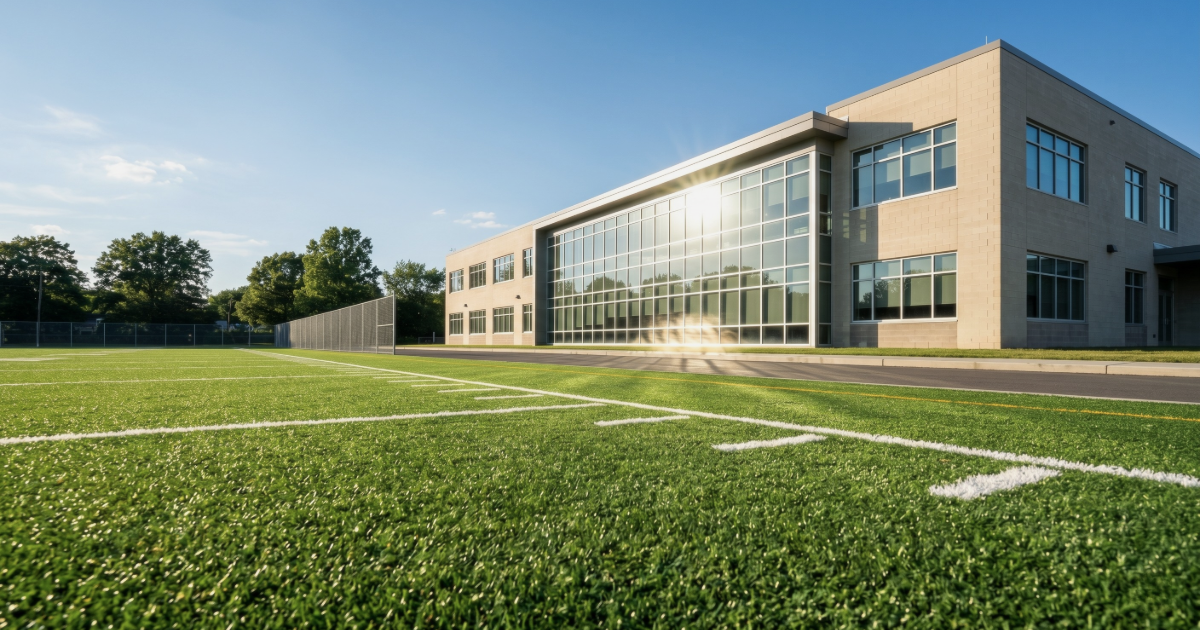
Artificial turf handles heat, UV exposure, and heavy foot traffic without issue. A concentrated beam of incident energy reflected off a nearby window is a different problem entirely. Whether the damage appears on a residential lawn, an athletic field, a playground surface, or commercial landscaping, the explanation is almost always the same. One or more windows are focusing reflected heat into a zone hot enough to melt synthetic fibers.
Turf protection film works by reducing the reflected energy before it ever reaches the turf. Energy Products Distribution (EPD), a 3M Master Distributor, supports property owners and facility managers through a nationwide network of professional installers who identify the source of the damage and recommend the right window film to reduce, delay, or stop it entirely depending upon the situation.
- The cause is almost always reflected sunlight from energy-efficient Low-E windows, not direct sun exposure
- The fix is exterior-applied window film that reduces incident energy reflection without adding a mirrored look to the glass
- Interior window film does not solve this problem and can make it worse
- A professional installer can identify the source windows, recommend the right film, and complete the installation without altering the appearance of the building
- The same film that protects turf also protects vinyl siding, patio furniture, and other surfaces from heat damage caused by window reflections
Exterior sun control window film can stop artificial turf from melting by reducing and absorbing the infrared and UV reflection at the glass surface before it reaches the turf. Interior film does not directly address this concern, which is why the film must be applied to the outside of the glass.
Without film on the source window, the damage continues every sunny day and typically spreads as seasonal sun angles shift the hot spots across new areas of turf.
Why Low-E Windows Melt Artificial Turf
The windows causing this damage are usually Low-E (low-emissivity) windows. Low-E glass is coated with a microscopically thin metallic layer designed to reflect infrared heat away from the interior of the building. That coating is what makes the windows energy efficient, but it also redirects infrared energy outward, toward whatever sits on the other side of the glass.
On a standard flat pane, the reflected energy disperses over a wide area and does not create dangerous temperatures. But double-pane windows are sealed units. When the internal air pressure differs from the outside air, the glass can bow slightly. That flex creates a concave shape that focuses the reflected energy into a narrow band, similar to a magnifying glass focusing sunlight into a burn point.
The result is a concentrated hot spot capable of melting and warping whatever sits in its path. Surface temperatures in these focused zones can exceed 200 degrees Fahrenheit. Artificial turf is typically made from polyethylene, which begins to soften and deform around 175 degrees.
This is why turf burn from window reflections often appears as distinct lines or stripes rather than broad, uniform discoloration. The reflected beam moves as the sun tracks across the sky, leaving a trail of melted synthetic fibers in its wake. The pattern shows up on residential lawns, field turf at athletic facilities, playground surfaces near school buildings, sport courts, and commercial landscaping adjacent to glass-heavy facades. If the damage looks like someone dragged a hot iron across the surface in a straight line, window reflection is the cause.
How to Find the Window Causing the Damage
The sun gets blamed first, but direct sunlight rarely causes this kind of localized damage. The actual source is usually a specific window. Identifying it is the first step toward a permanent fix.
Start with the damage pattern. Reflected heat leaves a signature: melting concentrated in a specific zone rather than spread across the entire surface. Uniform fading or wear across the whole surface is a different issue, typically UV degradation over time, and does not point to a single window.
Once the damaged area is identified, stand in that spot during peak afternoon sun when the heat is at its most intense. Look toward the windows on nearby buildings, including the building on the same property, neighboring structures, or adjacent commercial buildings. If one of those windows is throwing a visible glare directly at the damaged area, that window is most likely the source.
The reflection shifts throughout the day as the sun moves, so the hot spot may not be stationary. Second-story windows are frequent sources because their angle of reflection often aims downward toward ground-level surfaces. The responsible window is not always on the same property. A neighboring home, an office building across a parking lot, or a school gymnasium can just as easily direct concentrated heat onto an adjacent lawn or playing field. If the source window belongs to another property, a professional installer can provide technical documentation that explains the issue, which helps when starting that conversation with a neighbor or building owner.
Why Interior Window Film Does Not Solve This Problem
Property owners and facility managers often make a common mistake here. The natural first move is applying window tint to the inside of the glass, since interior film is the standard approach for reducing heat and glare inside a building. For turf protection, that approach does not work.
Interior sun control film reduces the amount of solar energy that passes through the glass into the building by absorbing or reflecting energy on the interior surface. That process has little effect on the exterior surface of the glass. The Low-E coating on the outside, the side facing the turf, continues to reflect infrared energy outward exactly as before.
In some cases, interior film makes the problem worse. Certain types of interior film increase the reflectivity of the glass on the exterior side. The glass then reflects more energy outward, not less, and the turf damage intensifies.
For turf protection, the film must go on the exterior surface of the glass. Interior film manages heat after it enters the building. Exterior film reduces it at the source.
For a deeper look at how interior and exterior applications differ, EPD has a useful overview of exterior vs. interior sun control window film.
How Exterior Window Film Stops the Damage
Exterior window film reduces the infrared energy the glass reflects outward while keeping the window clear and natural-looking.
Professional-grade exterior film targets infrared and UV wavelengths specifically, reducing the energy responsible for heat damage while maintaining the clarity and appearance of the glass. From the street, the film is virtually invisible. From inside, natural light still enters normally.
Some property owners avoid window film because they picture dark, metallic-looking glass. That concern is based on older film technology. Modern exterior film designed for turf protection is nearly invisible from both sides of the window. A mirrored or heavily tinted product can create its own problems, including HOA violations on residential properties, reduced curb appeal, and in some cases a different pattern of reflected energy that shifts the damage rather than eliminating it.
Exterior window film also protects the glass itself. It does not void the window warranty in most cases, though confirming compatibility with the window manufacturer before installation is always the right step. A qualified installer can check this as part of the assessment.
3M’s Solution for Turf Protection Film
One product well-suited for this application is 3M Prestige Exterior Window Film. It works by both reflecting and absorbing solar energy at the outside surface of the glass, which reduces the amount of infrared energy and UV light that ever reaches the Low-E coating on the interior pane. That is the step that matters for turf protection, stopping the energy before it gets redirected outward by the interior pane toward the turf rather than trying to manage it after the fact. For concave double-pane windows, Prestige Exterior can reduce the intensity of the concentrated reflected energy, though it cannot correct the curvature of the glass itself. That means damage may be reduced or stopped in most cases, but results depend on the specific conditions involved. A professional installer can assess the windows, help to identify the contributing factors, and help paint a picture of what to expect before any film is applied.
More Than Just Turf at Risk
The focused heat from window reflections damages more than turf. The same infrared energy that melts artificial turf can warp vinyl siding, discolor composite decking, damage patio furniture, and soften vehicle trim. Pool covers, above-ground pool walls, sport court surfaces, and rubber playground surfacing are all vulnerable. If turf damage is present, surveying the rest of the property for signs of similar damage in other areas exposed to the same windows is a good next step. Addressing the window with exterior film protects everything in the reflection path, not just the turf.
What to Expect from Professional Installation
A qualified installer will start by assessing the property to help determine which windows are responsible, what type of glass is installed, and which exterior film is the best fit. Not every window needs film, and not every film works on every glass type. The right product depends on the glass, the angle of exposure, and the distance to the affected surface.
The film is applied to the exterior of the glass. The process typically takes a few hours depending on access and window count, and the adhesive cures over several days.EPD’s network of professional installers handles turf protection projects for homes, schools, athletic facilities, and commercial properties. Every sunny day without film on that window is another day of damage. EPD’s Find an Installer tool connects property owners with a certified professional in their area.

Energy Products Distribution is a Master Distributor of 3M Window Films, 3M Paint Protection Films, 3M Wrap Film Series 2080, 3M Protection Wrap Films, 3M Architectural Finishes, 3M Ceramic Coatings, and Windshield Skin. We sell our products to professional installers throughout the US who provide turnkey installations (labor and material) to end-users in the automotive, commercial, government, and residential markets. Contact us to learn more about the benefits of these products.